Snowflake, Databricks, AtScale, and Omni, on the same stage, on purpose
By Mark Palmer
The OSI panel airs at the Semantic Layer Summit. Here’s what I’m hoping shakes loose.
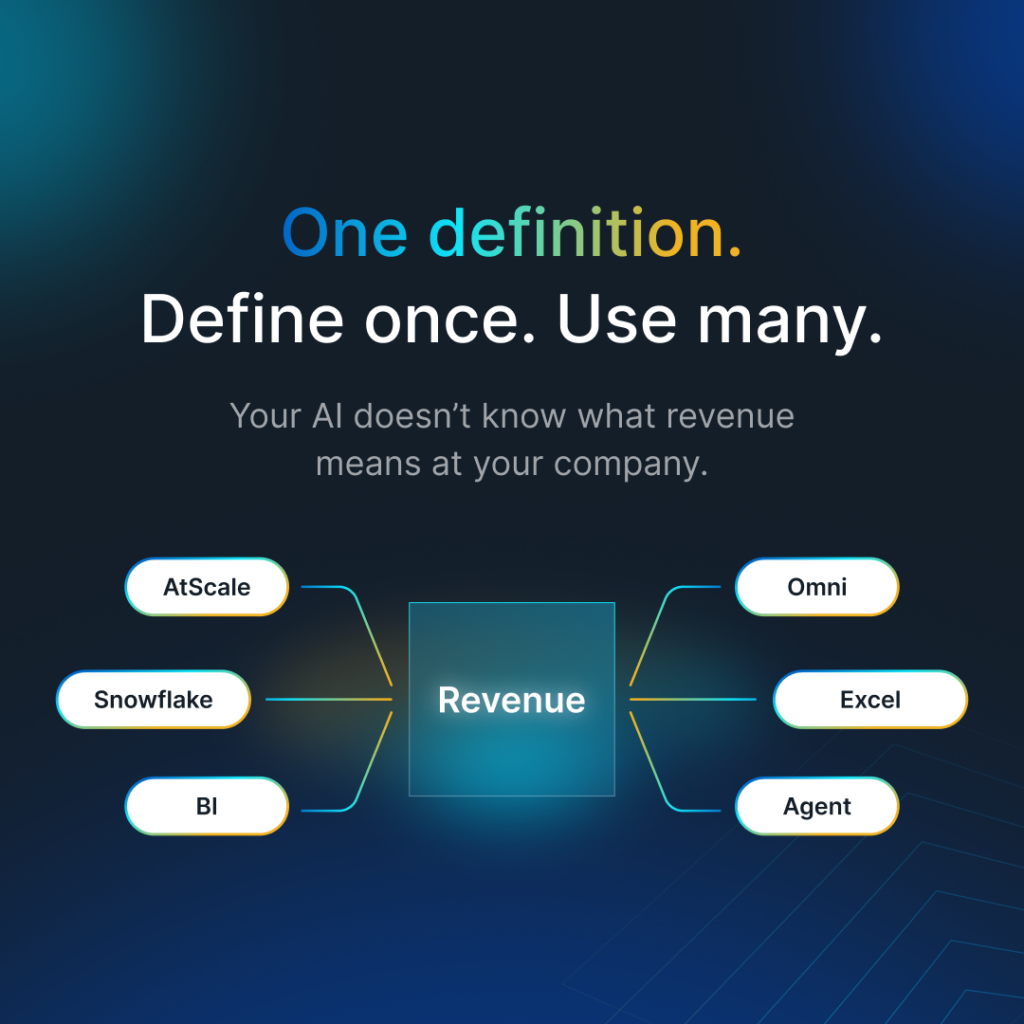
Snowflake and Databricks don’t usually sit at the same table. They compete for the same workloads, the same logos, the same line items in the same budgets. So when the roster for an upcoming Semantic Layer Summit panel came back with Josh Klahr from Snowflake, Ken Wong from Databricks, Dave Mariani from AtScale, and Jamie Davidson from Omni, I knew the hour could go somewhere different.
The session plays at the summit later this month. I’m moderating. Three questions are at the top of my notebook.
Why are they on the same panel?
This is the question I’m most curious about. Where does cooperation end and competition start? Snowflake and Databricks compete on almost every deal. So how did Open Semantic Interchange (OSI) become the place they decided to work together? Who said yes first, and why? And where do they think the boundary is, the line they’ll go their own ways across again?
My theory: customers forced it. They run Snowflake and Databricks side by side. They layer AtScale on top of both. They reach for Omni when they want a BI experience that respects the model. They have AI agents from three vendors reading the same data. Their customers need the freedom to choose their own tools.
So the question that matters is whether the semantics, the definitions of revenue, customer, churn, fiscal calendar, travel cleanly between platforms. That’s the bet behind OSI. I’d like to hear these four explain it in their own words.
Interchange format, or language?
Here’s where I think the panel will split.
OSI launched as an interchange format. A way to translate semantic models from system A to system B without point-to-point integrations between every vendor. Useful. But LLMs are already pretty good at that kind of translation. So is interchange the smaller prize?
If it is, the real ambition is OSI as a language specification. A standard for how you define a metric, how you compose it, and how a query against that metric resolves the same way in every tool.
I have a hunch about who comes down where. I’d rather not spoil it. Watch how Dave answers when I push him on “why not both?” Watch Jamie when Dave does.
Who’s missing?
The leaders behind OSI are at this table. Microsoft isn’t. I’m curious what Josh, Ken, Dave and Jamie make of that.
If you’ve been watching the OSI announcements, you’ve noticed. Power BI is the most-used BI tool on the planet. Microsoft principal architect Chris Webb recently published a post explaining, in technically sound detail, why Power BI’s semantic model is hard to fit into an open standard. The technical reasoning is real.
The customer question is a different one. AI agents are about to read your data from every direction. Does a closed garden serve the people writing the checks?
I’m betting the panel’s answer comes out more direct than diplomatic.
What else I’m hoping for
A few things on the wish list.
Josh, tell the Coco story. (If you don’t know it yet, you’ll want to.) Dave, walk us through the moment AI plus a semantic layer stopped being a better dashboard and started being a better analyst. Ken, make your case that ontologies, yes, ontologies, that word from 2004, are quietly the most important thing happening in the OSI working groups right now. Jamie, tell us what changes for a BI vendor when the semantic model isn’t yours to own anymore. It’s the customer’s.
The two-revenue-numbers problem has been around for thirty years. The people who can actually fix it just agreed to share a stage.
I’m curious what they say when the camera rolls. Watch it at the summit.